Every day we make many choices--together those choices will Make a Difference.

Tuesday, January 19, 2016

Soy & Risk of Breast Cancer


Soy! Myths vs. Facts
Image result for soy breast cancer
Myth 01:

 Consuming soy can increase the risk of breast cancer

Lets begin here: (from Medscape)

Breast cancer is the most commonly diagnosed cancer among women, with approximately 182,000 women diagnosed with breast cancer annually in the United States, accounting for approximately 26% of all incident cancers among women.[1]Each year, 40,000 women die of breast cancer, making it the second-leading cause of cancer deaths among American women after lung cancer. The lifetime risk of dying of breast cancer is approximately 3.4%.

Variation among populations:

The international incidence of female breast cancer varies markedly, being highest in the United States and lowest in Asia. However, incidence rates have been rising in traditionally low-incidence Asian countries, particularly in Japan, Singapore, and urban areas of China, as these regions make the transition toward a Western-style economy and pattern of reproductive behavior.[2]   
With Breast cancer the most commonly diagnosed cancer, it's obvious why there is cause for concern. However, pointing the finger at the soybean, a legume, is misleading and frankly, a true myth.

Breast Cancer & Soy:
Breast cancer and the effects of soy is probably one of the most controversial arguments online or in live conversation. Regardless of who is yelling the loudest, the FACT of the matter is that for more than 20 years the U.S. National Cancer Institute and laboratories around the world have been rigorously investigating the role of soy in breast caner prevention,
yes P-R-E-V-E-N-T-I-O-N!

Why all the testing of soy and breast cancer? Well, as mentioned above, Asian populations who traditionally consume soy as a dietary staple typically have far lower breast cancer rates than populations consuming a typical Western diet. And because roughly 2/3 of breast cancer is estrogen-sensitive, the anti-estrogenic effects of soy isoflavones may actually help decrease breast cancer risk.

In addition, studies have found that soy food and soy isoflavones don't increase breast tissue density or cause breast cells to multiply, unlike hormone therapy. In fact, consuming soy during the early years of life may help to reduce the risk of breast cancer later in life.

And in two recently published studies, soy consumption has also been shown to actually be associated with reduced recurrence rates and improved survival in people with breast cancer.

Barbara Klein explains there is evidence of women who have consumed soy all their lives have less breast cancer and fewer recurrences. Even women who have estrogen-sensitive breast cancer are able to eat soy and benefit from it in terms of less recurrence.


 Visit www.thefactsaboutsoy.com for additional details, facts Q & A, etc.

So... Soy it up for improved breast health!

Already a soy believer and looking for a natural soy supplement? 


I have been consuming the Shaklee protein for over 25 years.  I absolutely love that Shaklee soy protein is non-GMO, cold water washed and has no artificial ingredients or sweeteners. Plus it truly tastes great and mixes up well too!


Soy Information adapted from the Shaklee soy brochure #76292 

Tuesday, January 12, 2016

Soy: The Real Deal~Myths Vs Facts

What's the deal with soy?

      Its Good                                                             Its Evil
      It Causes Cancer                           It Decreases Breast Cancer
  It Causes thyroid problems                      Its Good for the Heart
       Men should not consume soy-makes you more feminine 


Yikes!  Reading those headlines, it's no wonder people are confused about soy.

Unfortunately, a lot of misinformation can be found on the internet about soy. Finding accurate and relevant facts to make an informed decision can be difficult-at best.  I hope the following (several) posts shed light on the rumors and falsehoods to help you navigate between the myths and the actual benefits of soy.


Did you know?
Soybeans are a complete protein, rich in many nutrients, vitamins and minerals. The Soybean comes from a very large extended legume family. Black beans, Navy beans Lentiles, Peanuts, Fava Beans and Snow peas are also in the legume family. Legumes offer a whole-host of health benefits including; good source of Vitamin B, Iron, Fiber, and Potassium, in addition, they also help keep our heart, gut and colon healthy. Now these are not their only health benefits, but those sure are some great ones!

So, why all the scary headlines about this little legume?
There are actually only a few, "soy bashers" who are the main instigators in the war on soy.  These anti-soy enthusiasts happen to be very vocal, and they're shouting most loudly about the effects of isoflavones, a group of naturally occurring, estrogen-like (read: estrogen-like NOT estrogen) plant chemicals found in soybeans.

But, really, almost all of the negative reports about soy stems from studies that involve rodents.  And here's the thing, rodents metabolize soy much differently than humans, so using these studies as a scientific model for how soy foods affect humans isn't all that helpful. So let's take a look at human data~shall we:

Humans & Soy
Other than those who are allergic to soy (less than 8%) the vast majority of the medical and scientific communities agrees that people should consume soy foods! Numerous scientific results obtained from human data, population studies, and clinical research all validate a variety of health benefits as well as the safety of regular consumption of soy foods.  In fact, there are strong indications that soy foods offer significant health benefits including reducing the risk of osteoporosis, some cancers, and heart disease.

To learn more about soy myths vs. facts, please follow along over the next several posts as I offer truthful tips, clinical studies and proven information about the health benefits of soy.

Coming Up~
Myth 01:  Consuming soy can increase the risk of breast cancer
Myth 02:  Soy causes thyroid problems
Myth 03:  Men & Boys shouldn't consume soy
Myth 04:  There's no evidence of the health benefits of soy

Soy in Love:
Shaklee Energizing Soy Protein


Already a soy advocate and looking for a high-quality, non-GMO soy product?  I've used the Shaklee soy products for over 25 years. I absolutely love the energy boost and how yummy it tastes! I also enjoy knowing there are absolutely no artificial ingredients and I've learned that Shaklee uses a cold water wash on their soybeans, no heat or alcohol in the cleaning& processing.

Be well~
Denise Gaskell
Gaskell Healthy Solutions
Offering Tips & Tools for Optimal Health


Wednesday, April 8, 2015

From Asthma to the #1 Household Poisoning, Are Your Cleaners Making You SICK?

The Real Dirt on Clean~


When it comes to being your healthiest, what you use on and around your body is just as important as what you put in your body.


So you know that good, healthy feeling you get when you clean your home? Sorry to spoil it, but you may have made it dirtier :(


Think of it this way, you wouldn't let your kids play with toxic chemicals, so why would you let them play on the floor that’s just been cleaned with them?  


Let’s talk about the dangers:

How Dangerous? Just take a look:
*Over 90% of poison exposures happen at home
*Common chlorine bleach is the #1 household chemical involved in poisoning
*Studies now show using bleach may be making you sicker
*Of chemicals commonly found in homes, over 150 have been linked to allergies, birth defects, cancer, and psychological abnormalities
*Children are highly vulnerable to chemical toxicants. Pound for pound of body weight, children drink more water, eat more food, and breathe more air than adults. The implication of this is that children will have substantially heavier exposures than adults to any toxiciants that are present.
*Common cleaners give off fumes that can potentially increase the risk of kids developing asthma, the most common chronic childhood disease.

*If your home is anything like the average U.S.home, you generate more than 20 pounds of household hazardous waste each year. (The EPA designates toilet cleaners, tub and tile cleaners,oven cleaners, and bleach as hazardous waste)


Your home should be the safest, healthiest, cleanest place in the world!

Turns out, there are some pretty easy things we can do to make our family safer and our home healthier. As it turns out, what’s good for our home is also good for the earth and everyone else on it.

So let’s help to make everyone healthier and safer!

Here are some ways to get started:  

1. Get the dirt. Educate yourself about what you bring into your home at

2. Have a clean-for-all. Put on the gloves and get rid of the nasty stuff in your home. Responsibly, of course. Local waste collection services have guidelines for proper household hazardous waste disposal, as well as collection sites for paint, batteries, cleaners, etc. Whatever you do, please don’t toss this stuff in the garbage, or dump down the drain or outside. Dispose properly.

3. Welcome healthy. Commit to carefully considering everything that crosses your doorstep.
Here are some safe, healthy things to have in your home:
• Cleaners that are truly safe and green. I have trusted and used Shaklee cleaners for over 25 years.
• Fresh air. Open your windows to reduce indoor air pollution.
• Essential oils. Use these instead of candles or air fresheners.
• Plants. Besides being nice to look at, they can absorb harmful gases and help clean the air.
• Organic cotton bedding. Avoid standard bedding treated with chemicals.
• Floors made of recycled and renewable resources.
• Healthier paint. That new paint smell can be as nasty as it smells. Choose low VOC paint.

4. Clean up our collective home. Make Earth healthier for all of us who call it home by using:
• Energy Star-rated appliances. Save money and energy.
• A low-flush toilet. Replace the largest user of water in your house!
• Low-flow shower-heads. Same pressure. Less water.
• Your flicker finger. Turn off lights and appliances when you’re not using them.
• Gray water system. Install one to recycle used household water for your lawn.
• Tankless water heater. Save money, energy, and space in the broom closet.
*Rain Barrel. Collect rain water to use for indoor/outdoor plants, filling bird baths, etc.

I hope you have found this information useful.  But mostly I hope that the information has intrigued you to review the products/chemicals/toxins you may have in your home and have been encouraged to REMOVE them!  If you have already made green changes to your home and cleaning regimen, Kudos to you!  Now, let’s go tell a friend-it just may improve their health or save a child or a pet from an unnecessary poisoning.

Be well,
Denise Gaskell                                       Gaskell Healthy Solutions  www.gaskell.myshaklee.com


Friday, February 20, 2015

Heart Healthy Overnight Oats

Need a little kick-start to begin your day? These overnight oats are filled to the brim with heart-healthy ingredients & added energy boost to keep you energized and satisfied all morning long!

Denise's Heart-Healthy Overnight Oats


 I typically don’t get overly excited about oatmeal, but I am truly loving the overnight oats with all the endless possibilities! And what’s not to love; they’re simple, yummy, and healthy! And this recipe offers heart healthy oats, soy, and berries. In addition, a natural energy boost your heart and whole body will enjoy!


Ingredients:  
For 2 pint sized jars, split the following:
2-Cups fresh or frozen berries
2-Cups Milk or Milk Alternative
1-Large banana-mashed
½-Cup Oats (I like quick steel cut oats)
½-Cup Vanilla Protein Powder 
(I only use Shaklee's Protein Powder)
2-Packets Matcha Tea Sticks 
(I used Shaklee-Pomegranate tea)

Recipe:
Into each of the 2 pint-size glass jars, place ingredients in this order:
Berries
Mashed Bananas
Dry Oats
Protein Powder 
Dry tea
Milk/Milk Alternative

There is no need to stir or shake the contents. 
Use jar lid or tin foil and close/cover each jar and place in refrigerator overnight. 

To enjoy, simply place desired amount of oats mixture in a bowl and warm in microwave. If desired, top off your oats with a serving of healthy fats like a handful of nuts or coconut. 
{Additional milk/milk alternative may be added per your taste.}

Enjoy!


To your health,    Denise Gaskell~Gaskell Healthy Solutions ~815-385-2834~

Wednesday, November 12, 2014

Are You Getting Enough Vitamin D3?


Now that the days are shorter and most of us are spending much less time outdoors, turns out we are missing out on more than just swimming parties and outdoor barbeques.  We're missing out on a fat soluble vitamin that can affect as many as 2000 genes in the body.
Clinical research studies show that vitamin D - the "sunshine vitamin" - offers a multitude of important benefits including supporting healthy heart function, preventing the flu, preventing diseases, is essential for bone health, and so much more.
                  
Yet, surprisingly, up to 80% of Americans may have insufficient levels.


Did you know? The level of vitamin D you may need depends on many factors including:  where you live, the time of year, your skin color, how much sun exposure you get each day, your age, if you are overweight, how often you eat fish or vitamin D fortified foods and how often you exercise. 

The Dilema~
Americans aren’t getting enough vitamin D. It's true, recent research studies suggests that up to 80% of people in the U.S. have insufficient levels of this essential nutrient, which again offers a multitude of health benefits. Why? Lack of sun exposure.Vitamin D is considered the “sunshine vitamin” because it’s produced as sunlight touches your skin.
Our busy workdays keep us indoors most of the time, preventing us from seeing much of the sun. And protective covering such as sunscreens and clothing inhibit vitamin D synthesis. While modifying your diet is another way to up your vitamin D intake, most people don’t get enough vitamin D from diet alone.

 
Are you getting enough Vitamin D?
As suggested, most Americans do not. Take this quick Vitamin D-ology quiz to find out~ 
http://gaskell.myshaklee.com/us/en/pop_VitaminD_Quiz.s.html


Like most of us, if you are not getting enough Vitamin D, here are several ways to add some, "sunshine" to your day!

  • Get at least 15 minutes of pure sunshine daily. And sitting in a sunny window does not count!
  • Eat fatty fish like salmon, trout, mackerel, tuna, shrimp and eel.
  • (not going to lie...no eel for me!)
  • Fortified Foods means Vitamin D may be added. Some yogurts, cereals, juices, milk and milk alternatives offer fortified Vitamin D
  • Cheese, egg yolks and beef liver contain small amount of Vitamin D as well

Vitamin D plays a major role in protecting your health and is vital for overall well-being, yet according to the National Institutes of Health, It can be very hard to get enough vitamin D from food sources alone. As a result, some people may need to take a vitamin D supplement.

So let's make it simple! Boost your level of vitamin D with Shaklee Vita-D3. Our vitamin D supplement contains 1,000 IU of high potency vitamin D3, the most potent form of vitamin D-offering guaranteed product purity.
As a reminder, recent studies confirm, Vitamin D has been shown to:
  • Help support healthy, heart function
  • Help promote immune health
  • Facilitate healthy cell development
  • Aid in calcium absorption for maintaining strong bones and teeth
Plus, Shaklee's Vita-D3 is subjected to over 300 tests to guarantee product purity.


Wishing you a bright sunshiny day!

Denise Gaskell
Gaskell Healthy Solutions
gaskellwellness@comcast.net

Monday, October 13, 2014

Post Workout Nutrition-Its ALL about Recovery

What the body needs AFTER a workout


It's ALL about recovery!  After exercise our body needs carbohydrates and fluids to replace the water and glycogen lost during your activity.  In addition, the body needs Protein to help repair any damaged or lost tissue.  Protein after your workout is also essential to help build new muscle in response to your activity. 

After Your Workout:
  1. Immediately (or very soon after) Drink a protein shake or eat foods high in protein along with re-hydration
  2. Then 2 hours after your workout, consume additional proteins and carbohydrates
Believe it or not, RECOVERY is almost as important as the workout itself!

Why Protein Post Workout?
Proteins are a major component of muscle tissue. And with billions (yes billions!) of muscles in the body, including your heart, you may begin to see why keeping muscles built, repaired and healthy is essential for athletic and overall health.  Proteins are a combination of approximately 20 different amino acids and create a multitude of biochemical reactions. Here are just a few proteins that are hugely important for any athlete:
  • Insulin-helps regulate blood-glucose levels & drives glucose into cells for energy
  • Pepcin-helps digest protein foods into amino-acids to be absorbed into blood stream
  • Collagen-component of skin & connected tissues (tendons & cartilage)-key to agility and mobility
  • Hemoglobin-transports oxygen to muscles & other tissues throughout the body
  • Actin/Myosin-responsible for muscle contractions
So to summarize, Protein is essential to Build Muscle, Repair Muscle and create Healthy Muscle! And as essential as protein is to the body, our bodies do NOT make protein, it needs to come from our diet.

What Type of Protein:
Protein is found in a variety of foods. And it DOES matter to the body that you choose protein sources that are healthy, complete and offer all 9 amino acids:
  • Essential amino acids cannot be made by the body. As a result, they must come from food.
  • The nine essential amino acids are: histidine, isoleucine, leucine, lysine, methionine, phenylalanine, threonine, tryptophan, and valine.
Remember that while, Dairy, Meat, and Eggs offer high protein, many also offer high saturated fat-so consume those less often.  Salmon is a great protein source and it is also rich in iron, b vitamins and omega's which have been proven to help with the heart-an essential muscle. Grains, legumes, nuts, nut butters, beans, and soy offer a great amount of healthy protein without the added cholesterol-so consume these more often. 

While I enjoy cooked meal, I don't always have time or have something prepared after my workouts or running events.  This is why I love the, "quickness" of an after work-out smoothie. I almost crave a healthy protein shake as it is quick, convenient and offers the added benefit of hydration and little or no cholesterol.http://gaskell.myshaklee.com/us/en/shop/healthyfoundations/sports/product-_p_shaklee-physiquep

I have found that using the Shaklee, Physique product has helped me to fight those sometimes voracious cravings after an intense work-out and especially after my 1/2 marathons.  In addition, using the Physique also reduces any muscle soreness to a complete zero!  I love how simple it is to mix up, I truly enjoy that Shaklee has done the clinical studies to make sure it works, it is safe, and I do love the creamy banana flavor too. (see below for clinical study on Physique)


Additional Tips:

You are what you eat!
Here's a great quote from Jordan Malone, Olympic short track speed skater, winning Bronze in 2010, and Silver in 2014 Jordan:  "Remember that your body is like a machine—if it doesn’t get the fuel and care it needs then it won’t work. Active people need protein, carbohydrates, sugar, electrolytes, and more to keep our bodies tuned.  If you don’t maintain your body properly then things start to break down." 
You've heard it before, you truly are what you eat! Remember that on "off" days, it is still essential to consume well balanced diets and treat these days as refueling days to stay hydrated, choose healthy foods, and supplement wisely.

  
Alcohol:
While those beer runs sound like loads of fun...it is not a good idea to drink alcohol after workout especially immediately after workout as alcohol interferes with rehydration and the loading of carbohydrates into muscle.  This can slow recovery and even lead to injury :( If you do choose an alcohol beverage, be sure to rehydrate with additional water and recovery drink.

Chocolate Milk:
I know, its convenient, and for many, it tastes good. However, even with all the latest hype, Chocolate milk isn't the best choice for recovery.  Its full of sugar, artificial ingredients, and yes, dairy. While many people avoid dairy for allergy reasons, there are many who believe that dairy really doesn't do the body good.  In addition to the added sugars and artificial ingredients, many studies have shown that dairy may actually be unhealthy for a variety of reasons.  Learn why to avoid dairy here.


Protein Drinks
If choosing a protein powder (which I recommend) be sure to choose a plant based, non-gmo, product that offers all 9 amino acids. In addition, be on the lookout for artificial sweeteners, artificial colorings/flavorings, or other questionable ingredients as these additives offer NO health benefit and certainly NO athletic benefits! Again, I use the Shaklee protein products as I trust their quality and love the results!

And Just for fun...how many muscles are in the human body? Would you believe over 50 billion!~
                  With all these muscles to keep healthy-remember to feed them well!
  • 200 muscles that might get discussed in a gym
  • 100 more muscles that are pretty obscure, but most massage therapist still knows about them
  • 400 more muscles that are really danged obscure, but various specialists know about them
  • several million hair-raising muscles
  • several billion smooth muscles cells blended together
  • exactly 1 heart muscle 
http://gaskell.myshaklee.com/us/en/shop/healthyfoundations/sports/product-_p_shaklee-physiquep
Pictured on the left is a Clinical Study on the Shaklee Physique product confirming it offers greater muscle recover than carbohydrates and proteins alone.


To your health,

Denise Gaskell
Gaskell Healthy Solutions

Monday, October 6, 2014

(Healthy) Pumpkin Fudge Recipe

                   (Healthy) Pumpkin Fudge

Yes, I have fallen for the pumpkin-flavor craze, or maybe its the cinnamon!
Either way, if you enjoy the fall flavors and a quick, healthy snack, you'll love these easy to make fall-flavored treats.

This recipe is a spin off the Peanut Butter Fudge recipe here on my blog with just a few tweaks to add in the fall flavors~

INGREDIENTS: 
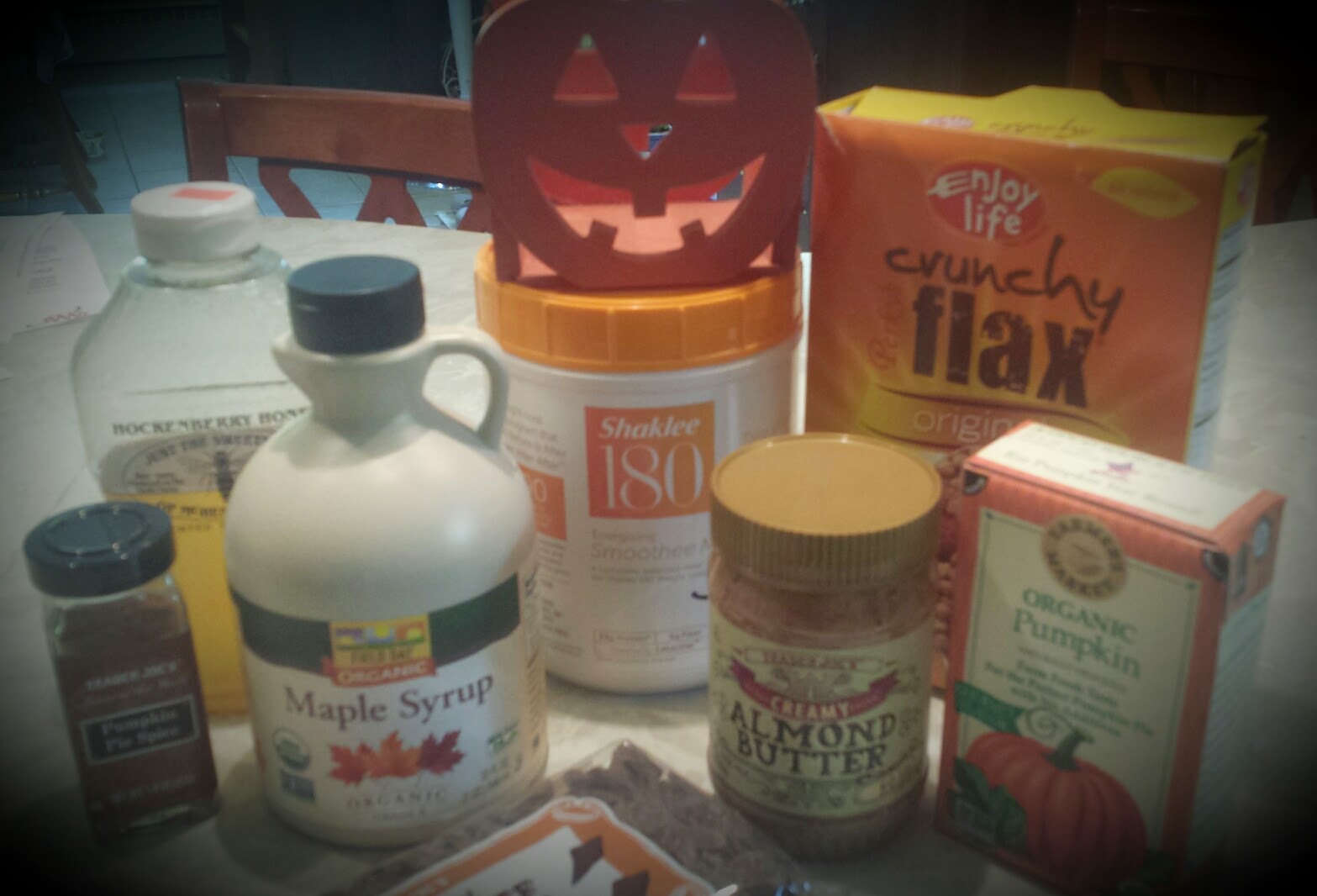
1 Cup Vanilla Protein Powder-I use Shaklee Brand
1 Cup Crunchy Cereal (I like Enjoy Life brand-typically found in gluten-free isle)
1 Cup Chocolate Chips (can use carob chips, raisins, cranberries, nuts, granola, etc.)
3/4 Cup Organic Almond Butter (or other nut or non-nut butter)
3/4 Cup mix of Natural Maple Syrup and Honey
1/4 Cup Organic Pumpkin-I used the Farmers Market brand
1 teaspoon Pumpkin Pie Spice 

DIRECTIONS:
Place all ingredients into mixing bowl. Use large spoon to stir until completely blended.
Roll or scoop into small individual balls. I use a small scooper, shown below to keep it simple.
May be enjoyed right away. Keep extras in refrigerator or freeze. 
Makes several dozen.


This healthy “fudge” offers a great amount of protein, fiber, and healthy carbohydrates. They are perfect for  after school snacking, for a quick and tasty energy boost, after workout nourishment, or anytime!
 ~Enjoy~

To your health,
 Denise Gaskell
Gaskell Healthy Solutions