Every day we make many choices--together those choices will Make a Difference.

Friday, March 1, 2013

(Guilt-Free!) Minty Green Smoothie

      Skip the sugar & fat overload~Make this minty shake instead!

Everything is a green buzz on St. Patrick's Day!  From Beer to Shamrock Shakes, we love to celebrate this event with everything green, including our drinks!

Indulging in your favorite thick & minty shake should truly be enjoyed as a very special treat. Unfortunately, highly sugared & high fat treats seem to be an every day event for many, especially as we are surrounded by the advertising that reminds us that this special McDonald's treat will only be available for a limited time-so get yours today, and tomorrow, and the next day, and next week!

If you are planning to indulge in this minty McDonald's McCafe Shamrock Shake to celebrate, there's a few things you might like to know.  There are many sizes available, but lets settle on the Medium.

medium, 16-ounce Shamrock Shake:
  • 660 calories
  • 19 grams of fat 
  • 12 grams of saturated fat 
  • 1 gram of trans fat
  • 93 grams of sugar (See chart below on what that looks like!)
  • 210 milligrams of sodium 


Thinking you may want to avoid the extra calories, overload of sugars, fats, and unhealthy ingredients?  Making your own minty shake at home is the perfect way to enjoy a healthier version of the overloaded Shamrock Shake!

                            A Healthy Shamrock Shake Recipe:
This nutritious & delicious green shake alternative gives you that smooth and minty taste, it will also provide you with over 24 grams of Protein, More than 6 grams of Fiber, it is packed with vitamins, minerals, offers NO questionable ingredients, and it will fill you up without filling you out!

Recipe:
2-Scoops Shaklee 180 Vanilla Shake Mix
1-Cup low-fat milk or milk alternative
Handful of spinach leaves
1/8 teaspoon peppermint extract
1 Cup frozen sliced banana OR 1 Cup ice cubes

Blend all ingredients and enjoy!  Each Recipe makes 1 complete meal replacement.

Want more green?  Add in one or more of the following & adjust liquid to taste.
1 whole peeled kiwi
1/2 peeled avocado
1/2 cup green kale or collard greens
Handful of mint leaves


For additional healthy smoothie recipes, click here:  Shaklee 180

~Wishing you a Happy, Healthy St. Patrick's Day and Beyond~

Denise Gaskell
Gaskell Healthy Solutions
Offering Tips & Tools for Optimal Health & Wealth
www.gaskell@myshaklee.com


Now that it's March, it's time to break out the green stuff for St. Patrick's Day! But if you're planning to do so by indulging in a cool, minty McDonald's McCafé Shamrock Shake to celebrate the Irish holiday, there's a few things you should know before hitting the drive-thru.  - See more at: http://www.shape.com/blogs/shape-your-life/shamrock-shake-what-you-should-know-you-sip-and-how-make-healthier-version#sthash.50OGriU7.dpuf
Now that it's March, it's time to break out the green stuff for St. Patrick's Day! But if you're planning to do so by indulging in a cool, minty McDonald's McCafé Shamrock Shake to celebrate the Irish holiday, there's a few things you should know before hitting the drive-thru.
Available for just a limited time, you probably already know that the Shamrock Shake isn't exactly healthy for you. But, let's go over the nutrition facts. A 16-ounce serving of the Shamrock Shake has 550 calories, 13 grams of fat, 8 grams of saturated fat, 1 gram of trans fat, 50 milligrams of cholesterol, 180 milligrams of sodium, no fiber, 82 grams of sugar and 13 grams of protein. The Shamrock Shake is made with McDonald's low-fat vanilla soft-serve ice cream and Shamrock Shake syrup, and then topped with whipped cream and a maraschino cherry.
Compared to other fast-food calorie-bombs, the Shamrock Shake isn't the worst thing out there, says Mary Hartley, registered dietitian and online nutritionist at AskMaryRD.com. For example, a 16-ounce Dairy Queen Blizzard has 1170 calories and 152 grams of sugar! But that doesn't mean the Shamrock Shake is a healthy choice.
"The 82 grams of sugar is the worst," Hartley says. "It’s like eating around six slices of bread all at once. The saturated fat is also high, at 40 percent of the daily limit (the goal is 10 percent). On the other hand, it is loaded with calcium (460 milligrams percent)." 
In fact, the 550 calories in a two-cup serving are about 28 percent of the average woman’s daily caloric requirement, so drinking this shake is more like eating lunch than having a treat, she says. A healthier option at the McDonald's drive-thru would be a McCafé large coffee, which has zero calories, fat and sugar. 
But, Hartley admits, if you're a true Shamrock Shake fan, you shouldn't be afraid to indulge a little. After all, you drink a Shamrock Shake for fun and camaraderie — not for health, she says. 
Making your own healthier version at home might be the perfect Shamrock Shake compromise. 
- See more at: http://www.shape.com/blogs/shape-your-life/shamrock-shake-what-you-should-know-you-sip-and-how-make-healthier-version#sthash.50OGriU7.dpuf
Now that it's March, it's time to break out the green stuff for St. Patrick's Day! But if you're planning to do so by indulging in a cool, minty McDonald's McCafé Shamrock Shake to celebrate the Irish holiday, there's a few things you should know before hitting the drive-thru.
Available for just a limited time, you probably already know that the Shamrock Shake isn't exactly healthy for you. But, let's go over the nutrition facts. A 16-ounce serving of the Shamrock Shake has 550 calories, 13 grams of fat, 8 grams of saturated fat, 1 gram of trans fat, 50 milligrams of cholesterol, 180 milligrams of sodium, no fiber, 82 grams of sugar and 13 grams of protein. The Shamrock Shake is made with McDonald's low-fat vanilla soft-serve ice cream and Shamrock Shake syrup, and then topped with whipped cream and a maraschino cherry.
Compared to other fast-food calorie-bombs, the Shamrock Shake isn't the worst thing out there, says Mary Hartley, registered dietitian and online nutritionist at AskMaryRD.com. For example, a 16-ounce Dairy Queen Blizzard has 1170 calories and 152 grams of sugar! But that doesn't mean the Shamrock Shake is a healthy choice.
"The 82 grams of sugar is the worst," Hartley says. "It’s like eating around six slices of bread all at once. The saturated fat is also high, at 40 percent of the daily limit (the goal is 10 percent). On the other hand, it is loaded with calcium (460 milligrams percent)." 
In fact, the 550 calories in a two-cup serving are about 28 percent of the average woman’s daily caloric requirement, so drinking this shake is more like eating lunch than having a treat, she says. A healthier option at the McDonald's drive-thru would be a McCafé large coffee, which has zero calories, fat and sugar. 
But, Hartley admits, if you're a true Shamrock Shake fan, you shouldn't be afraid to indulge a little. After all, you drink a Shamrock Shake for fun and camaraderie — not for health, she says. 
Making your own healthier version at home might be the perfect Shamrock Shake compromise. 
- See more at: http://www.shape.com/blogs/shape-your-life/shamrock-shake-what-you-should-know-you-sip-and-how-make-healthier-version#sthash.50OGriU7.dpuf
Now that it's March, it's time to break out the green stuff for St. Patrick's Day! But if you're planning to do so by indulging in a cool, minty McDonald's McCafé Shamrock Shake to celebrate the Irish holiday, there's a few things you should know before hitting the drive-thru.
Available for just a limited time, you probably already know that the Shamrock Shake isn't exactly healthy for you. But, let's go over the nutrition facts. A 16-ounce serving of the Shamrock Shake has 550 calories, 13 grams of fat, 8 grams of saturated fat, 1 gram of trans fat, 50 milligrams of cholesterol, 180 milligrams of sodium, no fiber, 82 grams of sugar and 13 grams of protein. The Shamrock Shake is made with McDonald's low-fat vanilla soft-serve ice cream and Shamrock Shake syrup, and then topped with whipped cream and a maraschino cherry.
Compared to other fast-food calorie-bombs, the Shamrock Shake isn't the worst thing out there, says Mary Hartley, registered dietitian and online nutritionist at AskMaryRD.com. For example, a 16-ounce Dairy Queen Blizzard has 1170 calories and 152 grams of sugar! But that doesn't mean the Shamrock Shake is a healthy choice.
"The 82 grams of sugar is the worst," Hartley says. "It’s like eating around six slices of bread all at once. The saturated fat is also high, at 40 percent of the daily limit (the goal is 10 percent). On the other hand, it is loaded with calcium (460 milligrams percent)." 
In fact, the 550 calories in a two-cup serving are about 28 percent of the average woman’s daily caloric requirement, so drinking this shake is more like eating lunch than having a treat, she says. A healthier option at the McDonald's drive-thru would be a McCafé large coffee, which has zero calories, fat and sugar. 
But, Hartley admits, if you're a true Shamrock Shake fan, you shouldn't be afraid to indulge a little. After all, you drink a Shamrock Shake for fun and camaraderie — not for health, she says. 
Making your own healthier version at home might be the perfect Shamrock Shake compromise. 
- See more at: http://www.shape.com/blogs/shape-your-life/shamrock-shake-what-you-should-know-you-sip-and-how-make-healthier-version#sthash.50OGriU7.dpuf

Wednesday, February 27, 2013

Your Weight IS a Heart Health Issue

How excess weight affects the heart:

Fighting the belly bulge?  It's not just a weight concern...its a major heart health concern as well. Did you know that fat around the middle increases your risk of developing fatty deposits in your blood vessels?   And its been proven that fat around the waist secretes inflammatory proteins that contribute to the fat deposition in the blood vessels.

This means that even if you are not obese, you are still at an increased risk for heart disease if you have an increased waist size.


 What is being overweight?  

Overweight and obesity are both defined by Body Mass Index or BMI (which is a ratio of weight to height). A BMI between 25 & 30 places someone in an overweight category and 30 or higher is considered obese. The following link will help you calculate your BMI.


Body Mass Index:

Body Mass Index (BMI) provides a reliable indicator of body fatness for most people and is used to screen for weight categories that may lead to health problems.

Calculate Your BMI


       What is your BMI?


More reasons to control your weight
The classifications of overweight and obese are not simply labels; there is a dramatic increase in the likelihood of disease as people increase their BMI,  

such as:
  • Coronary artery disease (CAD)
  • Certain cancers
  • High blood pressure
  • High cholesterol and triglycerides
  • Osteoarthritis
  • Sleep apnea
  • Stroke
  • Type 2 diabetes
The cost of being overweight
Obesity itself is not what causes the harm; it is the diseases that are associated with obesity that cause the harm. The costs of these diseases and syndromes are enormous, and that doesn't even begin to calculate the personal, physical, and emotional problems associated with increased BMI.
  • Obese people are expected to live 2-4 years less than someone with a healthy weight; the extremely obese (BMI over 40) have 8-10 years taken off their life expectancy. i
  • More than one-third of adults in the U.S. are considered overweight and another one-third are obese.
  • The medical costs associated with obesity are estimated at over $150 billion dollars.
  • Obese people cost an average of $1,429 more in medical services per year than someone who is normal weight.
      • What can I do to control my weight?
         

        There is much you can do to control your weight. First of all, there are no easy answers. Reducing and maintaining a healthy weight is one of the best tools we have to forestall or avoid many diseases.


        1. Lifestyle: Get support, exercise, drink plenty of water, track your progress, and eat a low-fat and low-calorie diet.
        2. Boost Your Metabolism: Maintaining or increasing your lean body mass (muscles) is your best bet for keeping your metabolism going strong. There are a variety of supplements that can help with your metabolism as well.
        3. Leucine: The amino acid leucine is great at helping maintain muscle mass, especially in people who are cutting calories and exercising.  Shaklee makes getting Leucine into your diet simple and delicious. Check out these simple smoothies that will help you build healthy muscle & lose those unwanted inches. Smoothees with Leucine
        4. Protein: Not only does protein help you feel full longer, it also helps you keep your lean body mass. Starting the morning with a good protein or protein shake helps you feel full longer. Here's a delicious protein powder that packs 24 grams of delicious & nutritious protein. 
        Protein Never Tasted So Good! 
        5.
        Fiber: The benefits of fiber on weight loss are many. Studies have shown that fiber can help you feel full, support blood sugar, and it helps remove cholesterol from the body as part of a healthy diet.  Fiber doesn't have to be bland! Try these scrumptious, chewy, apple & cinnamon bars
         Fiber-Meet Flavor!


        In closing, work daily to maintain a healthy weight with diet and exercise. Keeping your heart healthy will also keep you away from other health problems.

        To your health~

        Denise Gaskell
        Gaskell Healthy Soltuions
        gaskellwellness@comcast.net

Wednesday, February 20, 2013

Cholesterol Counts        

medical info provided by Dr. Jamie McManus

      What is cholesterol?  

Cholesterol is a waxy, fat-like substance that is found in every cell of our bodies and in our blood. Most of your circulating cholesterol is manufactured by your liver, although the cholesterol we consume in our diet contributes as well to the total cholesterol level.  

A simple blood test can measure the "good" cholesterol (HDL) and "bad "cholesterol (LDL) in your blood.


    Why control cholesterol?

While your body needs cholesterol, many of us have too much. Hardening of the arteries occurs when plaque made from cholesterol, calcium, and fat builds up in the arteries surrounding the heart. That increases the possibility of a heart attack or stroke.
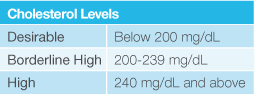
People with high total cholesterol (over 200 mg/dL) have almost twice the risk of a heart attack or stroke than people with desirable levels.


     The cost of high cholesterol
The financial cost of high cholesterol is difficult to determine, but we do know we spend $444 billion a year on heart disease and stroke costs. It is estimated that one out of every six dollars spent on health care is spent on cardiovascular disease, which accounts for more than one-third of all U.S. deaths.
•  One third of all adults have high cholesterol and half of them do nothing to control it.
•  An estimated 71 million adults have high cholesterol.
•  An estimated 935,000 heart attacks occur every year.
•  An estimated 795,000 strokes occur each year.
•  Men still outnumber women in heart attacks, but not by much. More women than man have strokes


      What can I do to control cholesterol?


   To Do: Help Control My Cholesterol!

1. Lifestyle: Start by having your cholesterol checked regularly. Make sure you are eating a healthy diet that includes plenty of fruits and vegetables, and avoid packaged, fried, and fast food. Lose weight if you are not your ideal weight. Exercise and avoid smoking.
2. Sterols: Plant sterols and stanols (2,000 mg/day) have been shown in multiple studies to help lower cholesterol levels as part of a diet low in saturated fat and cholesterol. They appear to work by blocking the absorption of cholesterol in the diet. Learn more about getting 2000mg daily of plant sterols & stanols.
3. Fiber: Multiple studies have shown the benefit of fiber on lowering cholesterol levels in high-risk subjects. Additional ways to add in extra fiber into your daily diet.
4. Soy: Soy supplementation has been shown to help lower cholesterol. Soy contains isoflavones, which are believed to be soy's main cholesterol-lowering ingredients. Soy a little love to your heart with these delicious & nutricious soy smoothees    


Wednesday, January 23, 2013


                    Beat the Flu Naturally-
                          Spread the good news and not your germs!
 

Healthy Seasonal Tips from Dr. Jamie McManus

 
You might have heard (or noticed by way of your empty school or workplace) that this year’s flu season is off to a bad start. How bad? Reports are that this flu season is the worst we’ve seen in about 10 years. The flu is so bad this year that Bostonhas declared a public health emergency. You can also take a look at the flu tracker from Google, which lets you compare previous years to this one and shows the dramatic increase in people with flu this year (with no end in sight).
Having the flu is no fun, but there are ways to avoid getting it in the first place:
  • Wash Your Hands: Despite all the high-tech wizardry we have, the best protection is still the simplest: wash your hands. The problem isn’t with what you get on your hands, it’s when you move your hands to your face. Estimates are that most people touch their face somewhere between 5 and 20 times every hour. That means whatever is on a doorknob, sink, desk, or the person’s hand you just shook is going to make it to your nose, mouth, or eye. Once there, it is a short trip until you are sick.
  • Cover Your Nose and Mouth: When you cough and sneeze make sure you cover your nose and mouth. Throw away tissues after you use them.
  • Be Healthy: Your body can better handle a bug if you are healthy. This means getting plenty of sleep, eating healthy, drinking plenty of fluids, and exercising.
  • Boost Your Immune System: I like to include lots of garlic and onions in my food during flu season. Onions and garlic have long been used for their healing properties and they are a tasty addition to any meal (especially soups). There are many other herbs and nutrients that can also help support your immune system; make sure you get enough of them as well.
With a little planning you could make it through this flu season in your best health.

You might be wondering, just how does my immune system work?  Information from the Center for Immune Research offers details of how the Immune System works and how to build your Immune System up naturally. 

 
Understanding the Immune System:

The immune system serves as your body's natural shield against infection. A wondrously complex and multi-layered system, it was designed to protect you from potential invaders, including viruses, bacteria, and allergens. Your immune system is also able to recognize dangerous changes in your cells and destroy these potential pre-cancerous cells. Part of this protection includes the production of interferon.

Interferon is activated by the immune system when a virus attacks a cell. Interferon serves two important functions. It signals neighboring cells and triggers their resistance mechanisms, and it activates other immune cells that kill invading pathogens. Interferon is essential to the immune system and helps protect us from the daily exposure to millions of germs that can lead to serious infection.

As shared by Dr. Jamie McManus, and on the CIR website there are many natural ways to build up our Immune Systems & ward off the Flu naturally.  As mentioned above, increasing our interferron will help kill invading germs, and protect us by building resistance to germs.

The ONLY patented and clinically proven product on the market guaranteed to increase interferron natuarally is- Shaklee's
Nutriferon:


Shaklee Nutriferon:

  • Exclusive patented formula providing our highest level of daily immune protection
  • The only supplement created by the discoverer of interferon
  • Naturally increases levels of interferon
  • Supported by 4 human clinical studies
  • Contains MACH, a patented blend of interferon-boosting plant extracts and a Shaklee exclusive. This proprietary blend of natural plant extracts is derived from pumpkin seeds, safflower flowers, plantago seeds, and Japanese honeysuckle flower buds-an ingredient combination which has been clinically proven to prevent the flu naturally.
 Click link to get started on Nutriferon & begin building a healthy Immune System and fight the Flu naturally! 

Wishing you a Happy, Healthy, and Joyous 2013
                          ~Denise~

Tuesday, January 15, 2013

What Happens After the Extreme Weight-Loss Show is Over?

Most of us have tuned in-or are glued to-the television weekly, watching people share their painful journey of how they came to be obese.  Many of the contestants are at least 200lbs overweight and are suffering from obesity induced medical conditions.  As the individual contestants share their stories,  We learn who they are and what they've come to almost hate about themselves, We listen to their stories often time feel their pain, we watch them fight thru their addictions & weaknesses. And week after week, we excitedly watch the inspirational weight-loss transformation unfold. 

The success stories are inspiring.  The inches are lost, the pounds are gone, and thankfully they're healthier. 

But what happens next?  Without the controlled environment, without the daily hours of personal training, without the delivery of fresh fruits & vegetables, will they keep the weight off?
And what about all of us watching from home?  The stories and journeys are inspiring....but are they motivating us to change? to exercise? to make healthier choices?

Below is Jacqui McCoy's story.  She was a contestant on Extreme Makeover: Weight Loss Edition and lost over 200 pounds.  Like many, her story is inspiring and often tear jerking.  But after losing the weight and winning the competition, Jacqui struggled to keep the weight off after the show and was, "grippled with the fear of going back to being 355 pounds."

 View link to see how Jacquie is getting her weight and her health back on track....for good.
Jaqui McCoy - How I am Regaining Control of My Life

Click Here to Watch Jacqui's Journey 

Losing weight can be as simple as it is difficult.  There is no magic pill and it will take some work.  But being a healthy weight is essential for overall health-and you deserve to live a long healthy life! 

Be in control of your health, stop the yo-yo dieting!  Learn what Jacqui and so many others are doing to take their health & their weight in a whole new direction-Check out Shaklee 180


Turn around the way you look and feel.

Healthy Weight

Go from before to after with clinically tested weight loss products–and a program designed to burn fat, not muscle

To your Health & whole new you!~  Happy 2013 & Beyond,            Denise :)
 

Tuesday, December 4, 2012


Improving Your Immune Health:  
Ways to Strengthen Your Immune System 
 The Center For Immune Research


 At a time when people are exposed to more than 200 different cold viruses, several strains of the flu, and hosts of allergens, having a healthy immune system is more important than ever before. Still, modern life constantly challenges immune function, which is why public health officials offer this important advice: don’t take your immune system for granted.What can you do to ensure that your immune system is healthy and ready to shield your body from infection? 
Here is what you need to know:

1. Find Ways to Relax
Because stress produces many different effects on the endocrine systems, including the well-known “fight or flight” response, scientists hypothesize that your immune system may become weakened after frequent activation of the autonomic nervous system in the case of chronic stresses. There are a number of techniques to help you relax, such as deep breathing or yoga, which can reduce mental and physical stress, tension and anxiety, promote good sleep, lower blood pressure and slow down your heart rate. Listening to music also reduces stress and relieves anxiety, as does relaxing in a hot bath.
2. Sleep Matters.
Besides leaving you feeling sluggish, irritable, and forgetful, not getting enough sleep can reduce the effectiveness of your immune system by up to 50 percent. This is because sleep time is when the body and immune system do most of its repairs and rejuvenation. Strive to get 7-8 hours of sleep each night. Remember rest and relaxation go hand in hand.
3. Feed Your Immune System Well.
According to a number of studies, not getting enough nutrients in the diet can weaken the immune system. That is why nutritionists recommend a -well-balanced diet that includes plenty of fruit, vegetables, low-fat dairy products and whole grains. Of special importance are foods that are rich in antioxidants (like vitamins C, E, beta carotene and lycopene), omega-3 fatty acids, and folate. Antioxidants fight and neutralize free radicals, which are molecules that damage cells and cause heart disease, cancer and premature aging. Omega-3 fatty acids (a polyunsaturated fat) have anti-inflammatory,
cardiovascular-enhancing and immune-regulating properties while folate prevents age-related cognitive decline, damage to blood vessels and brain cells.
4. Get Physically Active
Being physically active -- which means walking, climbing stairs, dancing, and other activity that involves movement -- strengthens your immune system, cardiovascular system, heart, muscles and bones. Being active also stimulates the release of endorphins, improves mental functioning, concentration/attention and cognitive performance, and lowers cholesterol, blood pressure, cortisol and other stress hormones.
5. Lose Weight in a Healthy Way
If you are overweight, losing weight is a healthy thing to do. But research finds that a rapid weight loss of more than 2 pounds a week can have negative immune effects. According to the Federal Trade Commission (FTC), successful weight loss is typically losing about 10 percent of your body weight in six months. Towards this end, experts recommend losing about ¾ to 2 pounds per week and not more than 3 pounds per week (weight loss may be faster at the start of a program). When it comes to successful weight loss and weight management, steady and slow is the way to go.
6. Wash Your Hands
One of the best ways to prevent the spread of microorganisms that cause infections is good hand hygiene. Washing your hands with soap and water several times per day and always before you eat greatly reduces your exposure to bacteria and viruses. In case you cannot wash with soap and water when you are away from home, carry some alcohol-based hand wipes with you to control microbial exposure and transmission.
7. Don’t Get Too Much Sun
Unprotected sun exposure is linked with immune suppression. That is why cold sores often appear following time spent in the sun. To protect your immune system, always wear a sunscreen of SPF 15 or higher.
8. Take Advantage of Immune-Supporting Supplementation
A balanced diet containing fruits, vegetables and whole grains is important to keep the immune system functioning effectively. But many Americans have nutritionally deficient diets, which is why it is now possible to take supplements containing herbs that have immunoactive properties. This means the herbs work in combination to naturally increase the body’s production of interferon, the protein that triggers the body’s immune system to mount an immune response.

Some of the botanicals with these immune-boosting properties are pumpkin seed extract, plantago seed, safflower flower, and Japanese honeysuckle flower buds.
~~~~~~~~~~~~~~~~

As shared above by the  Center For Immune Research there are a many ways we can be proactive in protecting and building up our immune system. The Challenge is that every day our bodies are under attack by pathogens and dangerous microbes that infest our surroundings with an unseen, unfelt, yet  undeniable health threat.  Our body's built-in immune system protects us whenever possible, but it's under contact attack from poor nutrition, stress, pollution, and fatigue.  
The GREAT news is that research has proven, consuming the combination of botanicals:  pumpkin seed extract, plantago seeds, safflower flower, and Japanese honeysuckle, you can increase the 3 types of interferon and naturally boost the body's immune system.  So how do you get the right amount of those botanicals?  In Shaklee's NutriFeron!  NutriFeron is the only immunity supplement formulated, patented and guaranteed to offer natural nutritional support to activate your immune system naturally.
Taking Shaklee's NutriFeron daily will:
Strengthen your immune system and help fend off attacks


Balance your immune response against environmental pollutants
Prepare your immune system to better handle invaders
Educates healthy cells about a present or potential danger in your body & helps to activate a plan of action
The ingredients in NutriFeron have been proven to fight the flu naturally

Get started today! It only takes 2 NutriFeron caplets daily to boost your immune system- naturally
Be well~